Menu
  • External link opens in new tab or window
  • External link opens in new tab or window

Prevention Research Consortium Corp is a 501(c)(3) nonprofit organization dedicated to reducing the global burden of dementia.


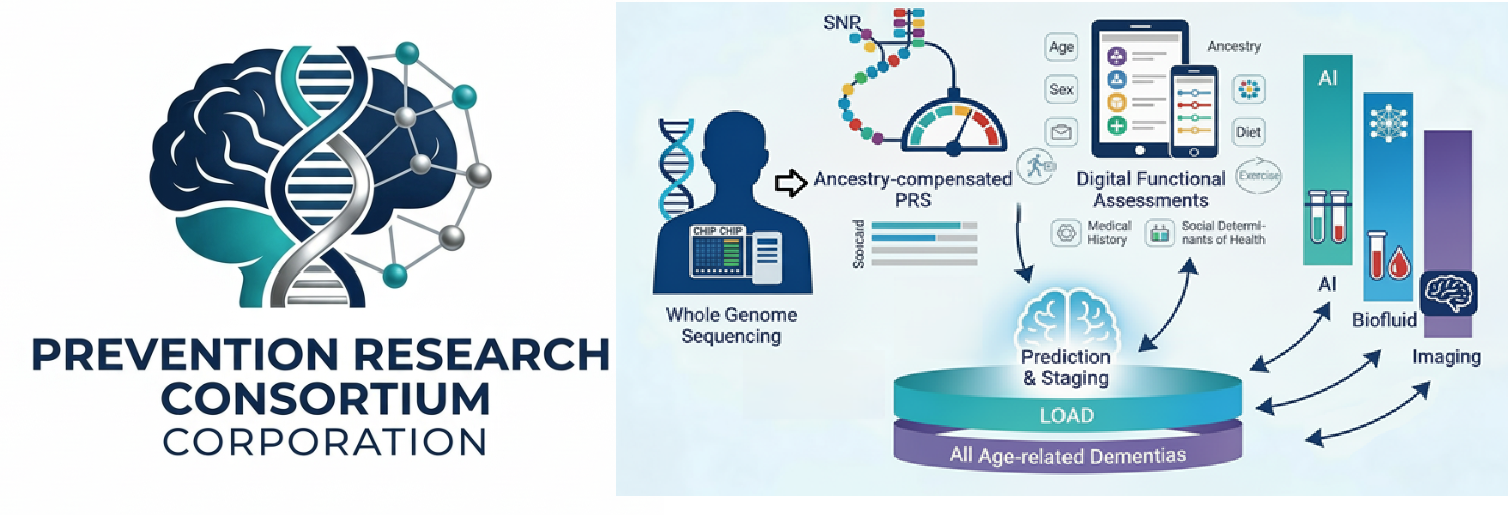
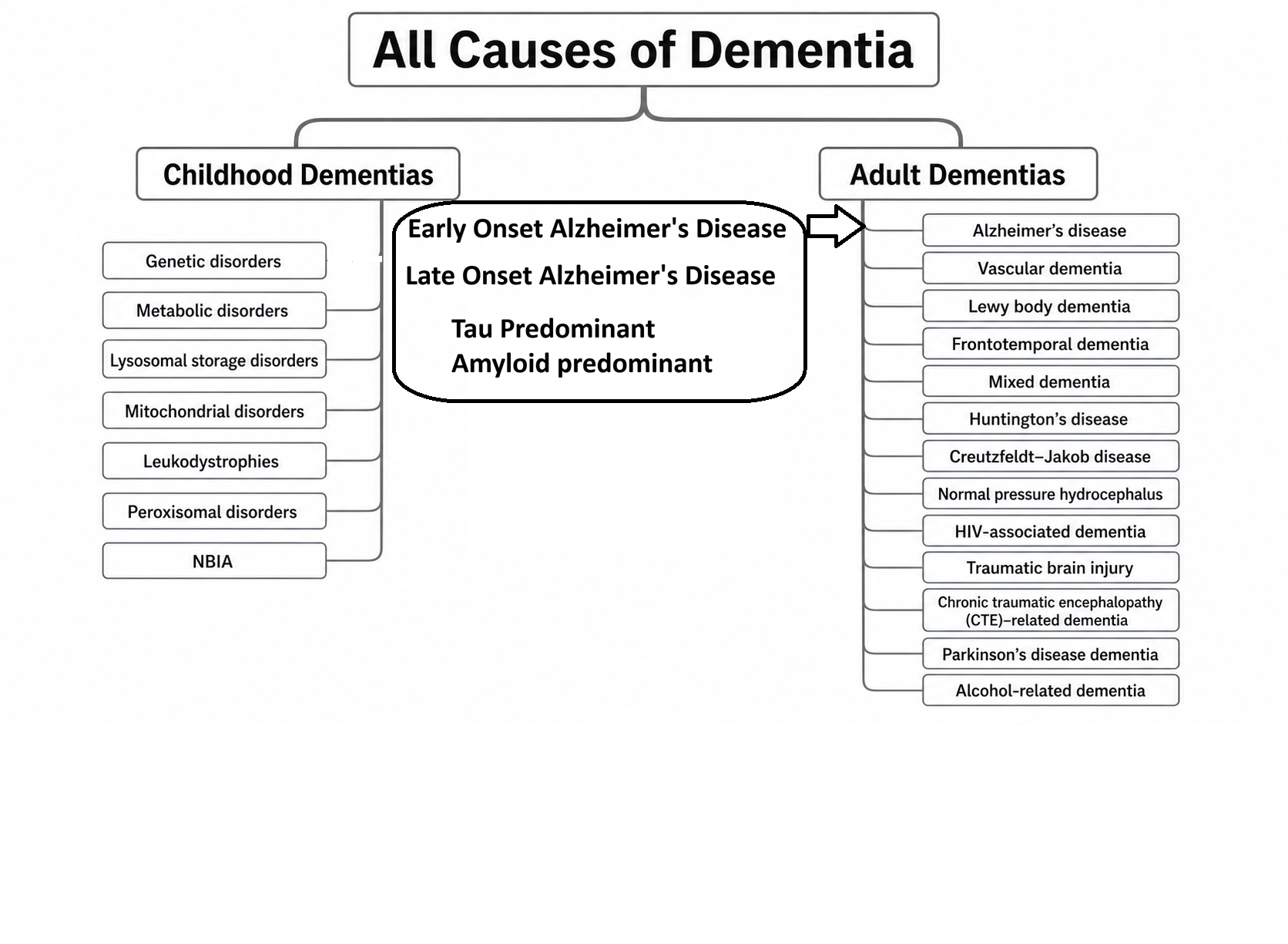
Our vision is to combine genomic, fluid, EEG, and EMR biomarkers to build a risk-assessment model that accurately predicts the incidence and stage of mild cognitive impairment due to multiple causes, particularly late-onset Alzheimer's disease (LOAD). The use of computational models that incorporate  comorbidity and all-cause adult dementia prediction is central to our multi-site, international study plan.


We aim to deliver clinical validation of  biomarker models that identify high-risk pre-LOAD individuals 5–10 years before plasma brain-derived pTau217 signals AD predementia—well before cognitive symptoms emerge. Findings from our international, multi-site study could transform early intervention strategies in dementia care.


Our members include an interdisciplinary team  of genomics experts, proteomic specialists, neurologists, psychiatrists, primary care providers, caregivers, dementia patients, digital technologists, bioinfomaticians, AI specialists, and generalists.
Leading Members :

External link opens in new tab or windowFoster Carr MD - founder, CEO,  and PI

External link opens in new tab or windowRawan Tarawneh MD, PI

External link opens in new tab or windowScott Burwell PhD, PI

External link opens in new tab or windowMahdi Mogri PhD

External link opens in new tab or windowMohammad Fili PhD, 

External link opens in new tab or windowCarlos Cruchaga PhD

External link opens in new tab or windowAndres D Klein PhD


Column

Elderly man with white hair and glasses in a suit, smiling slightly against a neutral background.

Our Mission

  Develop and validate scalable biomarker tools for the early prediction and staging of mild cognitive impairment ( The precursor to All Cause Dementia) . We leverage proteomic, genomic, and AI-driven approaches to enable accurate, accessible early detection of  mixed pathology cases.

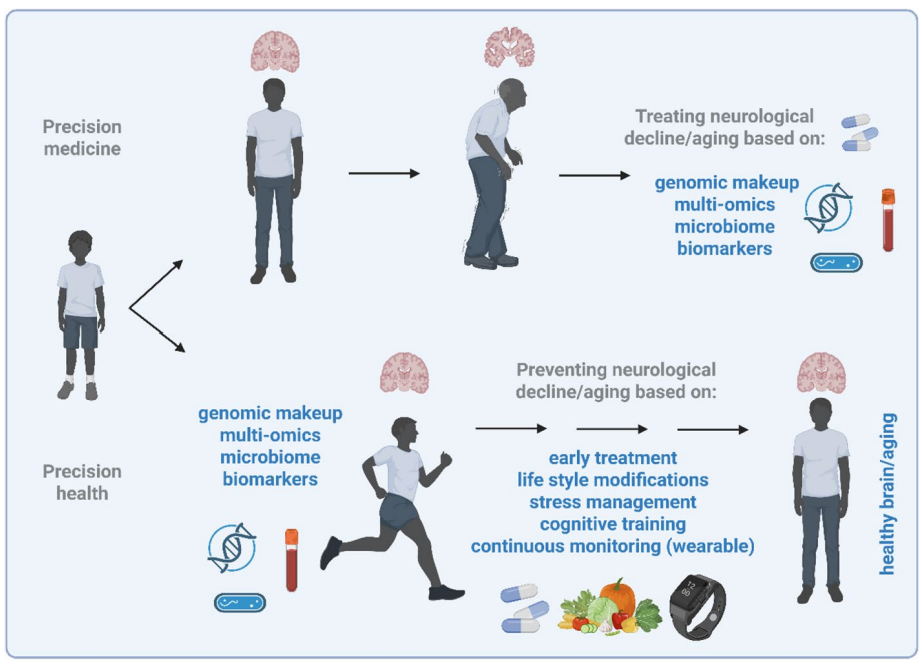
Building on this foundation, we aim to promote unbiased and independently validated technologies to improve detection and prevention of all diseases. Our goal is to help drive the shift from precision medicine to precision health—moving from reactive care to proactive, individualized prevention.

By  integrating  genomic, exposomic ( pollutants, diet + microbiome), metabolomic, proteomic, immunome, and RNA technologies into rigorous clinical research, we seek to deliver evidence-based strategies that improve outcomes, personalize care, and reduce the global burden of dementia and other diseases.


New Caption


External link opens in new tab or windowOur Approach

We develop and evaluate biomarker models to improve early detection and risk stratification for late-onset Alzheimer’s disease (LOAD). Our work focuses on identifying molecular signatures that can help predict cognitive impairment, distinguish biologically meaningful subgroups, and inform personalized prevention and treatment strategies.

Our General Proteogenomic and Exposome Approach integrates molecular profiles with environmental and exposure-related factors. Although Alzheimer’s disease is our initial focus, this framework is designed to support precision healthcare across a broader range of conditions.

We are evaluating our initial  External link opens in new tab or windowLOAD Biology Model  in retrospective and prospective clinical studies to assess its ability to predict mild cognitive impairment (MCI) and characterize distinct MCI subgroups. These studies assess predictive performance, including sensitivity and specificity, and explore the model’s potential to support clinical decision-making and targeted therapeutic development


Tools and Services


Column

Multi modal Assessment Tools

Help us identify and validate scalable tools for detecting high risk individuals for progression to  early cognitive change . Example tools include :

  • A proteogenomic biomarker based External link opens in new tab or windowILLNESS-DEATH MODEL that predicts time to progression to disease states.  Currently quantifying the  transition from cognitively normal  pTau217 negative  to cognitively normal pTau217 positive and subsequent conversion to mild cognitive impairment or dementia.  High priority biomarkers to be evaluated  include Nucleomic biomarkers  and External link opens in new tab or windowInter-Trial Coherence During 40 Hz Auditory -Visual Entrainment

 Our goal is to improve   pre-dementia prediction , staging,  and treatment guidelines.  We need your help in raising funds to support our  External link opens in new tab or windowClinicaltrials.gov listed study, (External link opens in new tab or windowAssessing Tools that Predict and Stage Mild Cognitive Impairment). Tax deductible contributions will help us to expand our small number of pilot subjects to a larger international  cohort with genetic, environmental, and lifestyle risks  for LOAD and other Dementias.


If you are  over 55 years  old , carry at least 1 ApoeE4 gene, and have taken an External link opens in new tab or windowonline cognitive impairment screening test  Please call Dr. Carr at  877  271 6078.  If you take the online External link opens in new tab or windowsaturn-test  then remember your test number and  continue the next step in our multi-study participant screening process.

Collaborate with our organization by eExternal link opens in new tab or windownrolling as a collaborating member , patient, subject, provider, and/or vendor .


Column

Members can access   :


1. External link opens in new tab or windowBiological Models of External link opens in new tab or windowAD or other External link opens in new tab or windowDementias


2. Fluid External link opens in new tab or windowBiomarkers of AD (External link opens in new tab or windowsaliva , plasma, serum, tears, urine, or  ISF) combined with EEG, Imaging, and EMR signatures.


  1. External link opens in new tab or windowWhole Genome Sequences with  pathogenic variant identification,  External link opens in new tab or windowPolygenic Risk Scores , and External link opens in new tab or windowSTR risk scores,( External link opens in new tab or windowSTR )
  2. External link opens in new tab or windowProteomic ,Nucleomic , and External link opens in new tab or windowMetabolomic Biomarkers
  3. AExternal link opens in new tab or windowuto antibody profiles and self reactive External link opens in new tab or windowCD8 T cells
  4. Cognitive, Sensory, and Motor  External link opens in new tab or windowFunctional  Assessments include  Speech biomarkers, Rings, Watches,  CGMs and online or phone based digital tests.
  5. External link opens in new tab or windowITC EEG (External link opens in new tab or windowMultimodal), MEG, Neuro(MRI,PET, CT) and Retinal IExternal link opens in new tab or windowmaging with associated AI software
  6. AI Analyzers of Longitudinal Medical Records and Wearable device data


3.  External link opens in new tab or windowClinical Guidelines,  Trial Recruitment , External link opens in new tab or windowRegulations & Ethics 

4.  External link opens in new tab or windowData , IT InfrastrExternal link opens in new tab or windowucture, External link opens in new tab or windowAI/Data Fusion & Analytics


Benefits of membership include  networking in special interest groups, access to  prognostic prediction and staging tools, risk questionnaires, simplified lab/prescription ordering services, disease model repositories, HIPAA compliant  storage of  wearable/imaging/ fluid biomarker data, and many other tools that can assist in the delivery of dementia care.  UK Visitors should visit the External link opens in new tab or window The Barbara Alliance for related clinical data infrastructure programs and clinical trial screening-recruitment services.


Enroll Using our  Heads up Health APP for Telemedical Office Members.


 SupPort us  OR Contact Us


Column

Help spread awareness about the External link opens in new tab or windowPredict Predementia Clinical Study by sharing it on External link opens in new tab or windowLinkedIn, External link opens in new tab or windowFacebook, External link opens in new tab or windowBluesky, External link opens in new tab or windowX, and by word of mouth.


Prevention Research Consortium Corp
admin@prevention-research.org
8772716078


close lightbox