Prevention Research Consortium Corp
Menu
  • External link opens in new tab or window
Column

Welcome to Prevention Research Consortium Corp

ABOUT US

Prevention Research Consortium Corp is a non-profit organization focused on reducing the global burden of dementia.

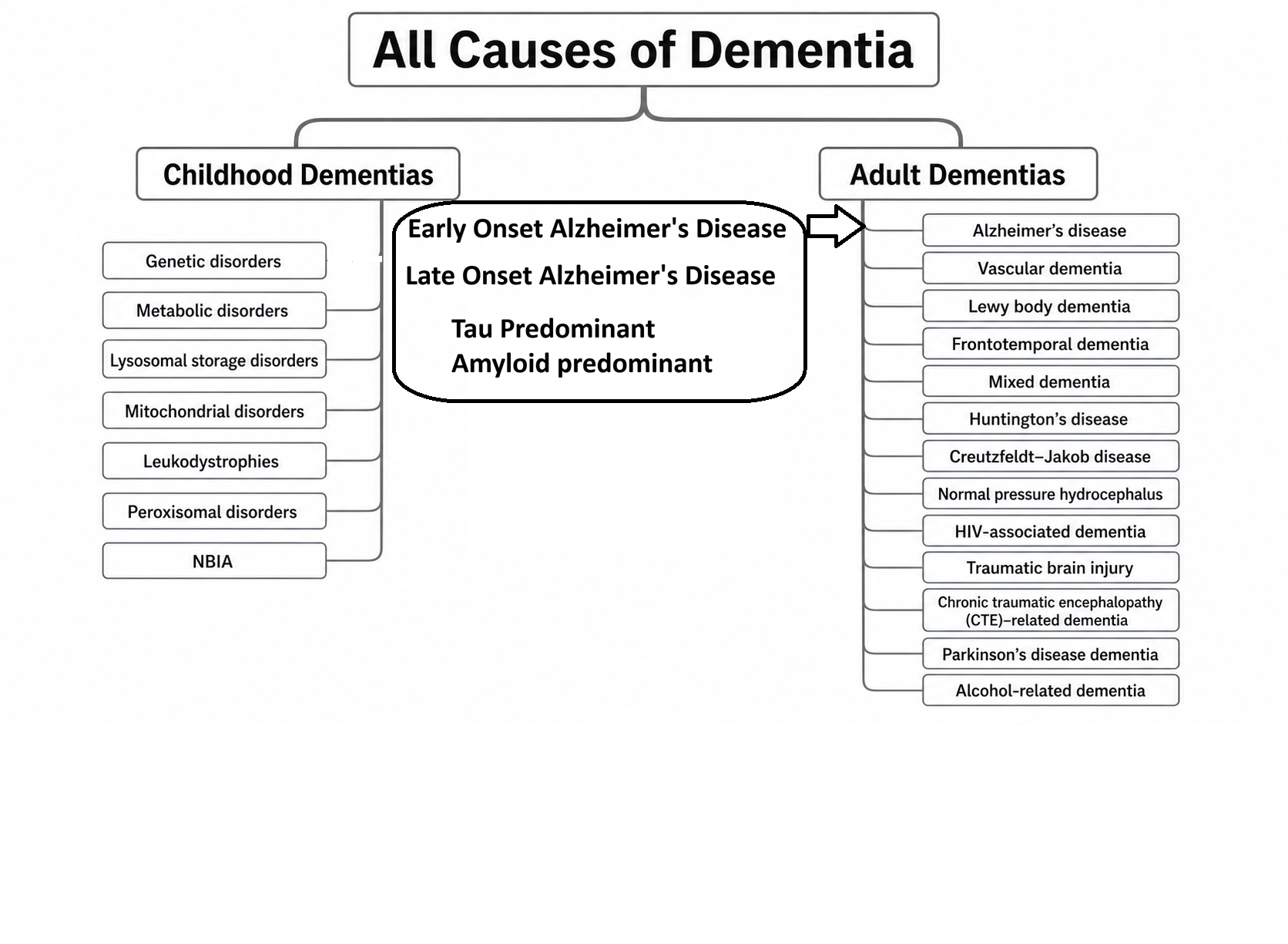
Our vision is to utilize  genomic and biomarker analysis tools to create a proteogenomic risk assessment model that  accurately predicts the future incidence  and stage of multiple subtypes of late onset Alzheimer's Disease .  We plan to advance our model to all forms of dementia prediction after completion of a 2 year observational clinical study focused on validating a proteogenomic model for identifying high Risk  LOAD patients 10 years before dementia symptoms develop. The study's findings could revolutionize early intervention strategies for dementia care.


Column


Elderly woman with gray hair and glasses smiling warmly outdoors, with soft sunlight and greenery in the background.

Who we are

 Prevention Research Consortium Corp is a non-profit organization focused on reducing the global burden of dementia.  Our members include an interdisciplinary team of Genomics Experts, Proteomic Specialists, Neurologists, Psychiatrists, Primary Care Providers, Caregivers, Dementia Patients, Digital Technologists, Bioinformaticians,  AI Specialists, and Generalists.


Column


Elderly man with white hair and glasses in a suit, smiling slightly against a neutral background.

Our Mission

  We aim to assess scalable biomarker tools for prediction and staging of mild cognitive impairment due to early Alzheimer's Disease.

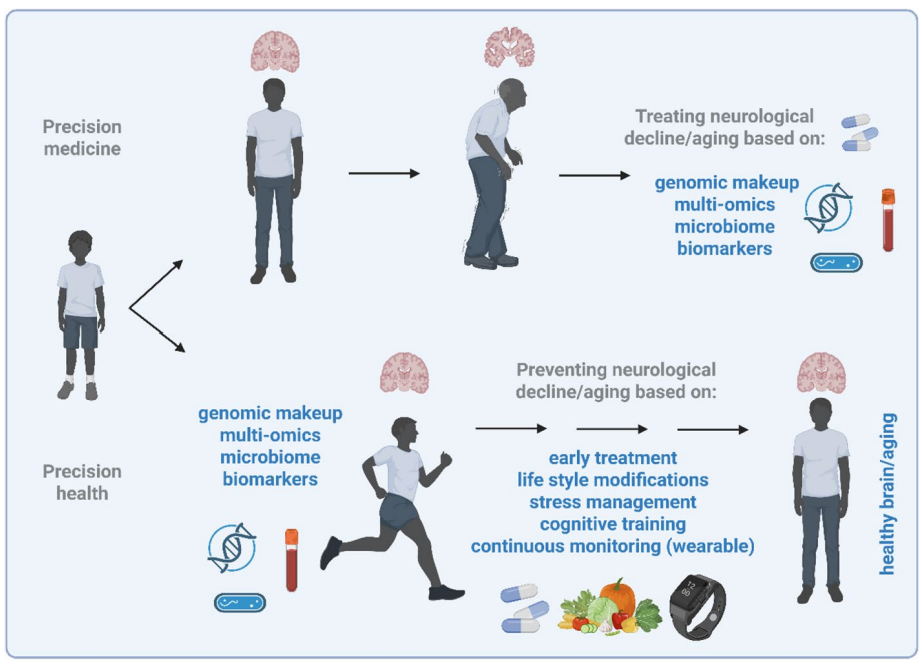
We then plan to scale these proteogenomic and ai tools to enhance early detection of all adult dementias and  subsequently  other diseases.  Our goal is to lead the transition from precision medicine to precision health. By integrating technology and  clinical research, we aim to personalize healthcare for better outcomes and prevention. Our mission is to utilize evidence-based detection and prevention strategies that reduce the global burden of dementia. Join us in making a meaningful impact in the world of healthcare innovation.


New Caption


External link opens in new tab or windowColorful abstract brain with floating spheres and shapes on a blue background.

External link opens in new tab or windowOur Approach

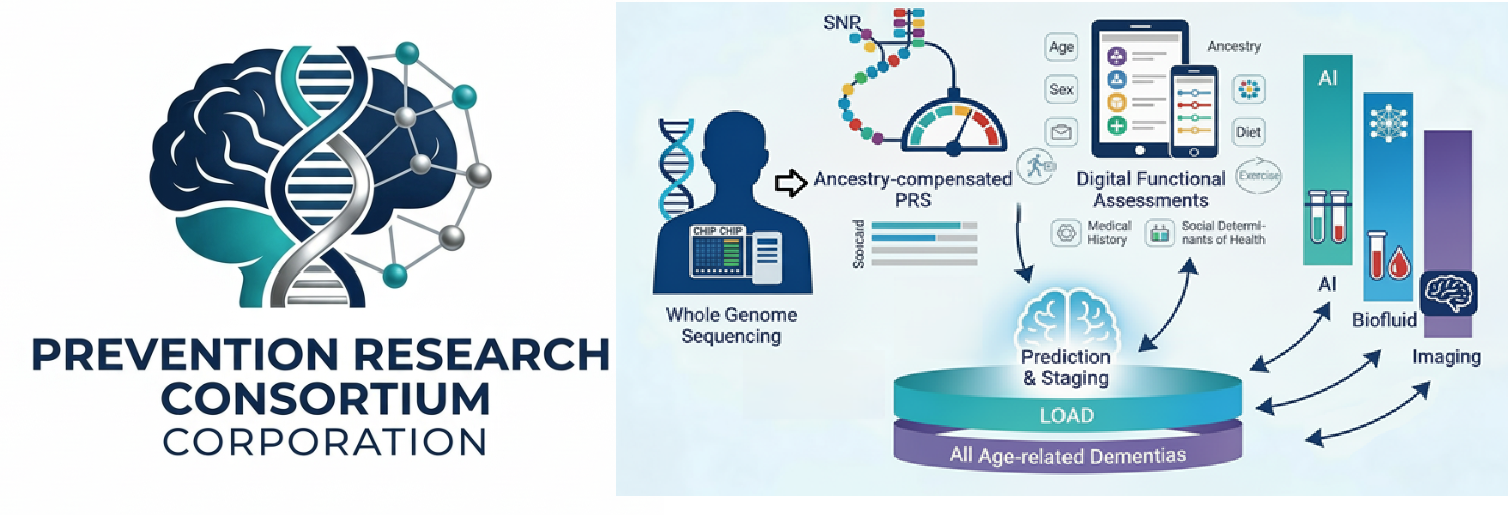
We evaluate the sensitivity and specificity of biomarker tools with a focus on early prediction or diagnosis of Late-Onset Alzheimer's Disease (LOAD). While our current efforts center on Alzheimer's, our General Proteogenomic and Exposome Approach is broadly applicable to advancing precision healthcare across a wide range of conditions.  Our Working LOAD Disease Model ( imaged above ) is being validated in the first prospective human clinical study designed to assess the accuracy  of tools  for the the prediction and stratification of  Mild Cognitive Impairment (MCI - The precursor to Alzheimer's Disease).   Our approach it to continuously evolve our mathematical models and data collection tools to meet the challenges of predictive analytics.
Leading Members

External link opens in new tab or windowFoster Carr MD - founder, CEO,  and PI

External link opens in new tab or windowMahdi Mogri PhD

External link opens in new tab or windowCarlos Cruchaga PhD

External link opens in new tab or windowKatherine Toups MD, PI

External link opens in new tab or windowAndres D Klein PhD

Members

External link opens in new tab or windowLink caption

Scott Burwell PhD

Steve Charlap MD

Thomas Karikari PhD

Anna Munoz Farre MSExternal link opens in new tab or window

Jason Burns

Gary Strobel MS

External link opens in new tab or windowLeonardo Lado MD

Christopher Wheeler PhD

Sophie Grapentine PhD

Lyla Anderson MD, PhD

Chris Barry PhD

Gautum Wali PhD

Aren Giske MD

Andres Servea PhD

Lasse Folkersen PhD

Breno Diniz PhD

Qiang Liu PhD

Varun Dwaraka PhD

Ryan Smith PhD

NEWS


External link opens in new tab or windowA cerebrospinal fluid synaptic protein biomarker for prediction of cognitive resilience versus decline in Alzheimer’s disease | Nature Medicine March 31 2025


External link opens in new tab or windowProtein-based Diagnosis and Analysis of Co-pathologies Across Neurodegenerative Diseases: Large-Scale AI-Boosted CSF and Plasma Classification July 10 2025


External link opens in new tab or windowProteomic signatures of the APOE ε4 and APOE ε2 genetic variants and Alzheimer’s disease | Nature Aging  May 15 2026  Preprinted Aug 2025


External link opens in new tab or windowLarge‐scale proteomics analysis of Alzheimer's Disease plasma blood reveals sex and APOE specific signatures - PMC Jan 12 2026


External link opens in new tab or windowAPOE‐stratified Proteomic and Metabolomic Analysis Reveals Mitochondrial Dysfunction Inflammation and Lipid Dysregulation in Alzheimer's Disease - Li - 2026 - Advanced Science - Wiley Online Library- Feb 5 2026


External link opens in new tab or windowCures Alzheimer's Fund Grants  Award for  Proteogenomic Model that predicts Late onset Alzheimer's Disease.  Feb 2026


External link opens in new tab or windowPrevention Research Consortium obtains IRB approval for a Predict Predementia Longitudinal  observation study of ApoE4 Carriers. March 26 2026


External link opens in new tab or windowA deep joint-learning proteomics model for diagnosis of six conditions associated with dementia | Nature Medicine March 31 2026


External link opens in new tab or windowEarly peripheral immune signaling precedes tau elevation and blood–brain barrier disruption in Alzheimer’s disease | bioRxiv  April 4 2026


External link opens in new tab or windowGPND‐AI NULISA: A 15‐Protein AI classifier for diagnosis and co‐pathology profiling across neurodegenerative diseases - Xu - 2026 - Alzheimer's & Dementia - Wiley Online Library  April 28 2026


External link opens in new tab or windowLinking the exposome to the brain–behaviour phenotype | Nature Reviews Neuroscience  May 14 2026


External link opens in new tab or windowReduced ULK1 links impaired autophagy and mitophagy to Alzheimer’s disease pathology | Nature Aging May 14 2026


External link opens in new tab or windowBcnPit - Ace Alzheimer Center Barcelona May 13-15 2026


External link opens in new tab or windowCell-type-specific APOE4 cascade across the Alzheimer’s disease continuum: Neuron  May 14 2026


Resources and Services


Column

Multi modal Assessment Tools

  We identify and validate scalable tools for detecting high risk individuals for progression to  early cognitive change . These tools include online speech biomarker tests,  genomic variant analysis software,  AI Analyzers of Longitudinal Medical Records ,  prognostic and diagnostic biomarker panels,  Wearable digital device data capture and transmission , Retinal Diagnostic Imagers,  invoked EEG biomarkers, as well as AI analyzed  Radiological Imaging Scans.

 Our goal is to improve   pre-dementia prediction , staging,  and treatment guidelines.

We are raising funds to support our  External link opens in new tab or windowClinicaltrials.gov listed study, (External link opens in new tab or windowAssessing Tools that Predict and Stage Mild Cognitive Impairment). Your contribution will help us to expand from a small number of pilot subjects into an a  larger international population of high risk individuals.  (Based on evaluation of their genetics, plasma proteomics, medical history, environment, and lifestyle.)  


External link opens in new tab or windowEnroll as a member , patient, provider, and/or vendor.

  Benefits of enrollment include access to Prognostic Prediction and Staging Tools, Wearable device data sharing, Lifestyle intervention recommendations, nutritional status assays and treatments, toxin identification, exposure risk prevention, Anti-Aging Treatments, Vascular risk management, Disease Model Repositories, Digital Medical Library, and scientific collaboration tools.


Column

Doctor smiling and conversing with a patient, both sitting at a table indoors.


Consortium members can join  the following working groups.

  1. External link opens in new tab or windowBiological Models for AD  and other External link opens in new tab or windowDementias ( covering the continuum  from Cognitively Normal , Subjective Cognitive Decline,  Mild Cognitive Impairement, to  Dementia )
    1. External link opens in new tab or windowWhole Genome Sequencing and External link opens in new tab or windowPolygenic Risk Scoring combined with External link opens in new tab or windowProteomics .
    2. Pathogenic External link opens in new tab or windowCD8 T cell hypothesis and peripheral immune system alterations in preclinical AD.
    3. External link opens in new tab or windowProtein, DNA, and RNA Biomarkers including Cf -DNA and PBMC-DNA External link opens in new tab or windowMethylomics
  2. Cognitive and Continuous External link opens in new tab or windowFunctional  Assessments

  3. EEG, MEG, and Neuro IExternal link opens in new tab or windowmaging 

  4. External link opens in new tab or windowClinical Guidelines,  Trial Recruitment , External link opens in new tab or windowRegulatory & Ethics

  5. External link opens in new tab or windowData , IT Infrastructure, External link opens in new tab or windowAI/Data Fusion & Analytics 

Column

External link opens in new tab or windowLink captionEnroll Using our  Heads up Health APP for Telemedical Office Members.

Check if you or a friend are eligibility to enroll in our  longitudinal clinical study  by calling 877  271 6078.


Help spread awareness about the Predict Predementia Clinical Study by sharing it on LinkedIn, Facebook, Bluesky, X, and by mentioning it through word of mouth.

Column

 SupPort us  OR Contact Us


Column

Prevention Research Consortium Corp
admin@prevention-research.org
8772716078


close lightbox